
HOW LONG, OH LORD?
some thoughts on the Ascension

Almost the last thing Jesus told his disciples before he vanished into the sky above them was to wait. I’m sure this wasn’t what they were expecting, or even what they wanted to hear.
Their day had begun with yet another resurrection appearance, and Jesus led them out of the city center to one of the hills that surrounds Jerusalem. Ever since the resurrection, for weeks (or maybe months, we don’t really know how long), Jesus had been meeting them in these resurrection appearances. He walked through walls to meet them in their living room, he showed up on the beach when they rowed in from fishing, he met them on countryside walks. Here, there, and everywhere, without warning, he showed up and gave them hope. They were by turns filled with joy, and bewildered as to what to make of it all. They learned that death was not the end, that life would go on; his presence must have brought healing and hope after the horror and grief of his crucifixion. But weeks had gone by, and they still did not have any clear idea what they were supposed to do, or what was going to happen next. So here at the top of the hill, they grab the opportunity, and try to pin him down. They asked him, ‘when will the Kingdom come? Is it now?’ But he replied, ‘It is not for you to know the times or seasons…’ (Acts 1:6-7).
He didn’t give them a vision statement, or a strategic plan; he didn’t offer a discipleship program, a church growth strategy, or even an outline for prayer. But he did give them one clear instruction: Stay here in the city until you have been clothed with power from on high. Luke 24:49)
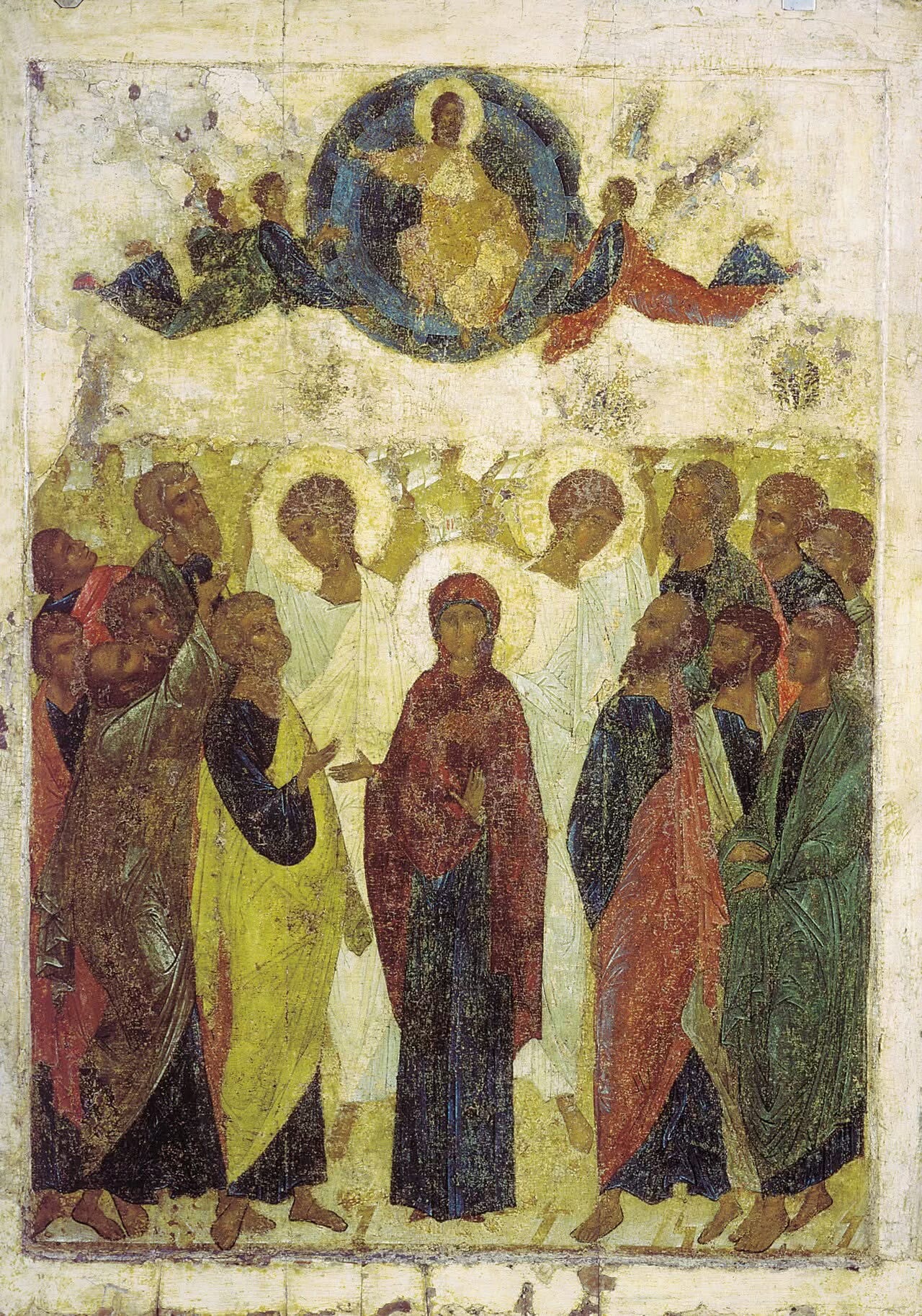
It is not for you to know times or seasons.
Whatever we do – from running a business or school or charity, to organizing a community event, to the nitty gritty of everyday life – we need some sense of purpose, and we need a plan, or nothing will happen at all. Plans and schedules help us establish a little order in our lives. There’s nothing wrong with plans, unless they fool us into thinking we are in control of events.
· Who was it who said that life is what happens while you are making plans? (John Lennon made it famous, though Allen Saunders said it first in the Reader’s Digest in 1957)
· Who was it who said that when we make plans, God laughs? (if you want to know, it’s actually a Yiddish Proverb)
So Jesus wasn’t to be drawn on plans, or on predictions about the outcome of world events. Instead he turned their focus onto the deeper, uncomfortable truth is that life itself is unpredictable. And then he mysteriously vanished from sight, but not before he had told them:
Stay here in the city until you have been clothed with power from on high.
And that is what they did. The men and the women together. Back to the borrowed room in Jerusalem, where they had waited after the crucifixion. There they stayed, waiting, praying, until . . .
. . . well, here’s the thing: we already know the end of the story. We know that there are only nine days between the feast of the Ascension and Pentecost, because our liturgical calendar tells us so. But they didn’t know any of that. When you already know the end of the story, it’s easy to forget what it was like for them: to forget that they waited, not knowing exactly what they were waiting for (‘power from on high? what does that mean, exactly?) and not knowing when it was going to happen. Days? Weeks? Months?

Maybe, alongside the images of glory and wonder, the hymns of praise that lift our eyes to the sky in wonder, there’s another message on Ascension day:
that God’s promises don’t always come with a clear description
and they almost never come with a timetable
The nine days between Ascension and Pentecost are traditionally called a ‘novena’ – a period of prayer lasting nine days, or sometimes nine consecutive weeks. The novena to the Sacred Heart of Jesus, for instance, is a nine-day prayer; while the novena to Our Lady is kept on every Wednesday for nine consecutive weeks. Sometimes — especially in monastic settings — a novena is called as a one-off occasion, if a community is in a situation of special need. In each case, praying a novena deliberately looks forward to some kind of anticipated outcome.
Perhaps, then, as we pray through the nine days from Ascension and Pentecost, the most helpful thing to contemplate is precisely that we – like the disciples – are not in control of events, and we do not know in detail what God has planned for us. This can be particularly helpful if you are actually in a situation where you are waiting, without a timetable, not knowing what’s going to happen. If you are dealing with a health issue, where the treatment and the outcome are unpredictable, or if your job is insecure, or if you’ve simply turned on the news, and wondered whether the world can actually survive the latest round of climate emergency or political turmoil. But it can also, quite simply, be a good discipline to step back from focusing on outcomes and deliverables, and admit to ourselves that we are not, ultimately, in control of our lives. When the kingdom eventually comes, it won’t be because of our plans and programs.
Jesus never answered their question; he didn’t offer any certainty around the particulars. But he did promise that the Spirit would come. And the essence of that promise was – and still is – that God will always be present.
So, for these nine days between Ascension and Pentecost, let’s wait and pray once again. Like that first roomful of women and men who waited and prayed, not knowing exactly what they were waiting for, or how long they would wait. Let’s set aside our own plans and ideas as to what God should do. (As someone once said, ‘don't just do something . . . sit there’.) And remember that the terms of the promise were not the particulars. Simply his presence.
Tell me: how do you handle waiting when things are unpredictable?
He told his disciples that some of them would still be alive when he returns, so despite what we have been taught many of us believe that he did indeed come back and took his disciples to the place that he's promised to prepare for them and it happened around AD 70 when the Romans fulfilled the prophesy of Jesus regarding the leveling of Jerusalem. Otherwise we would have to assume Jesus was either lying or ignorant which does not sit well with me.